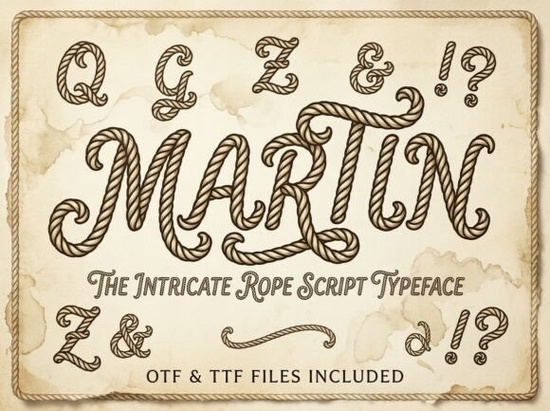
The Martin font is a display script made entirely from twisted rope details. Each letter looks hand-shaped, giving designs a rugged maritime feel while still flowing like traditional cursive. If you work on nautical branding, coastal apparel, seafood menus, or rustic event stationery, this typeface brings an honest, textured quality that polished sans-serifs simply can't match.
What Makes Martin Font Stand Out From Other Script Fonts?
Most script fonts rely on smooth strokes or brush textures. Martin takes a different route every curve and connector is built from rope fibers that twist and overlap like actual nautical line. This gives the lettering a tactile, three-dimensional look even in flat digital designs. The result feels hand-crafted rather than generated, which matters when you want a logo or headline to look intentional and personal.
Compared to other display options on Creative Fabrica, Martin occupies a specific niche. A bold typeface like Military Steel works well for industrial or strength-based branding, while Martin leans into coastal warmth and adventure. They solve different design problems, but both add serious personality to a project.
Where Does This Font Work Best?
Martin was built with specific use cases in mind, and it shines brightest in these areas:
- Nautical and maritime branding boat charters, fishing companies, marina signage, and coastal tourism logos.
- Seafood restaurant menus and logos the rope texture immediately signals ocean-fresh dining.
- Beachwear and coastal apparel think boutique labels, hang tags, and print-on-demand t-shirt designs.
- Pirate-themed projects book covers, party invitations, Halloween graphics, and escape room branding.
- Western and rustic event stationery rodeo flyers, barn wedding invitations, and ranch logos.
- Tiki bar and tropical branding cocktail menus, surf shop signage, and vacation rental collateral.
The rope detailing holds up well at larger sizes, making it a strong candidate for headlines and logos. At very small sizes, though, some of the twisted texture may lose clarity, so it's best used as a display or accent font rather than for body copy.
How Do You Pair Martin With Other Fonts?
A textured display script like Martin needs a calm, readable companion for body text. Here are a few pairing approaches that work well:
- Martin + a clean sans-serif Use Martin for the headline and a simple sans-serif for supporting text. This keeps the design grounded while letting the rope texture stand out.
- Martin + a vintage serif For old-world nautical or western themes, pairing with a classic serif adds depth. Something with a retro editorial feel, similar to the style found in vintage magazine display fonts, can complement the handcrafted vibe without competing with it.
- Martin + a chunky display font If you're designing for summer events or beach festivals, a bold companion font adds energy. Options like those in chunky summer display fonts work well for supporting graphics and secondary headlines.
A good rule of thumb: pair one textured font with one clean font. Two textured fonts together usually feel cluttered.
Who Should Consider Using Martin Font?
This font is a practical choice for several groups:
- Print-on-demand sellers designing niche apparel for coastal, pirate, or western audiences.
- Small business owners running seafood restaurants, beach shops, surf brands, or ranch-style venues.
- Graphic designers and branding specialists working on nautical or rustic identity packages.
- Crafters and hobbyists making party invitations, scrapbook pages, or custom signage.
- Self-publishing authors creating covers for adventure, pirate, or historical fiction books.
If your project leans playful and bold rather than refined and minimal, you might also explore options like display fonts with a club-style edge or fun alternatives such as sunny gang-style display fonts for different moods. Having a few display fonts in your toolkit means you can match the right personality to each brief.
What Should You Check Before Downloading?
Before you commit, keep these practical points in mind:
- License details Make sure the license covers your intended use, whether that's commercial print-on-demand, client work, or personal projects.
- File formats Confirm the font includes the format you need (OTF, TTF, or web font files).
- Character set Check whether it includes multilingual characters, numerals, and punctuation if your project requires them.
- Size testing Preview the font at the size you plan to use. Rope textures look great large but may blur at small point sizes.
- Color and background Dark rope textures tend to show best on light backgrounds. Test it against your brand palette before finalizing.
Next step: Download Martin from Creative Fabrica, set up a quick test layout with your brand colors, and pair it with a clean sans-serif to see how it fits your project. If the rope texture works at your target size, you have a strong, distinctive typeface for any nautical or rustic design. If you need a softer look, explore the broader Creative Fabrica catalog for complementary display styles that match your creative direction.
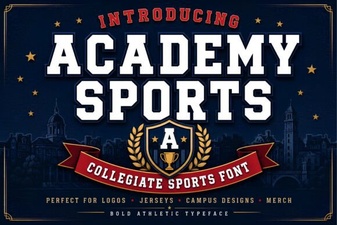 Academy Sports Font for Bold and Energetic Designs
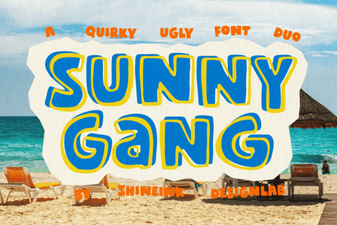 Sunny Gang Font: Bold and Playful Display Typeface
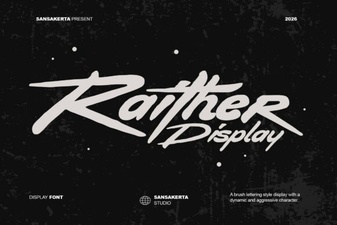 Raither Display Font: Bold and Creative Typography for Designers
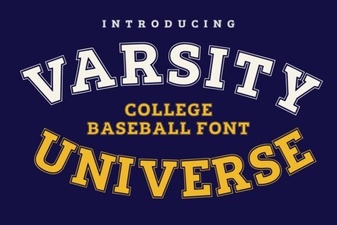 Varsity Universe Font Free Download | Display Typeface
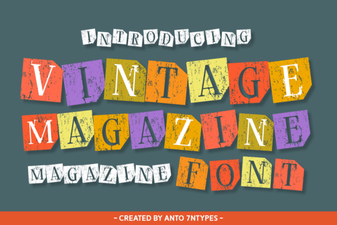 Vintage Magazine Fonts for Classic Design Projects
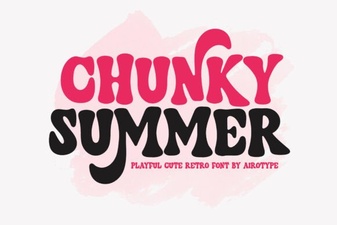 Chunky Summer Font: Bold and Fun Typeface for Creative Projects